
Gas Line Work Done With the System Fully Understood
Gas line services in Akron for fireplaces, outdoor installations, and appliances requiring new or extended fuel supply
What changes after a gas line is correctly installed or repaired is straightforward: the appliance or fireplace it serves operates at the pressure and flow rate it requires, connections hold without detectable leakage, and the system passes the pressure test that confirms it is safe to use. Fireplace Mike provides gas line services in Akron for homeowners adding gas fireplaces, extending fuel supply to outdoor installations, converting wood-burning units to gas inserts, or addressing issues with existing lines serving fireplace appliances. Getting the supply line right is not a separate task from the fireplace work — it is part of the same project, and treating them as independent creates gaps in how the system is sized and tested.
Gas line work for fireplace and hearth applications involves determining the correct pipe size for the BTU demand of the appliance, routing from the existing supply point through the path of least obstruction and most direct access, making connections at both the supply and appliance ends, and pressure-testing the completed line before the appliance is operated. In homes built prior to the 1980s — which make up a significant portion of Akron's residential stock — existing gas supply lines may use older black iron pipe with fittings that need inspection before any new branch connection is made to them.
Request a consultation to discuss the fuel supply requirements for your specific fireplace or appliance installation.
Why Gas Line Sizing and Routing Decisions Matter
Undersized gas supply lines are one of the most common causes of fireplace and appliance performance problems that get misdiagnosed as burner or valve failures. When the pipe delivering gas to the appliance is too small for its BTU input rating, the appliance runs at reduced capacity, may not stay lit under demand, and often generates error codes or pilot failures that appear to be component problems rather than supply problems. Correct sizing requires calculating the total BTU load on the line, the length of the run from the meter or supply point, and any fittings that add equivalent pipe length to the run — each of those factors reduces available pressure at the appliance end.
Once a gas line is correctly installed and tested, you will notice that the appliance ignites consistently, holds its set flame height without fluctuation, and operates at the output level it was rated for — behaviors that are absent when supply pressure is insufficient. The pressure test that follows installation is not optional documentation; it is the verification step that confirms the system is sealed and delivering gas only where it is designed to.
Gas line work in Akron requires pulling the appropriate permit through the city's building department before work begins, and the completed installation requires inspection before the line is placed into service — Fireplace Mike manages that process as part of the project rather than leaving it to the homeowner to coordinate separately..
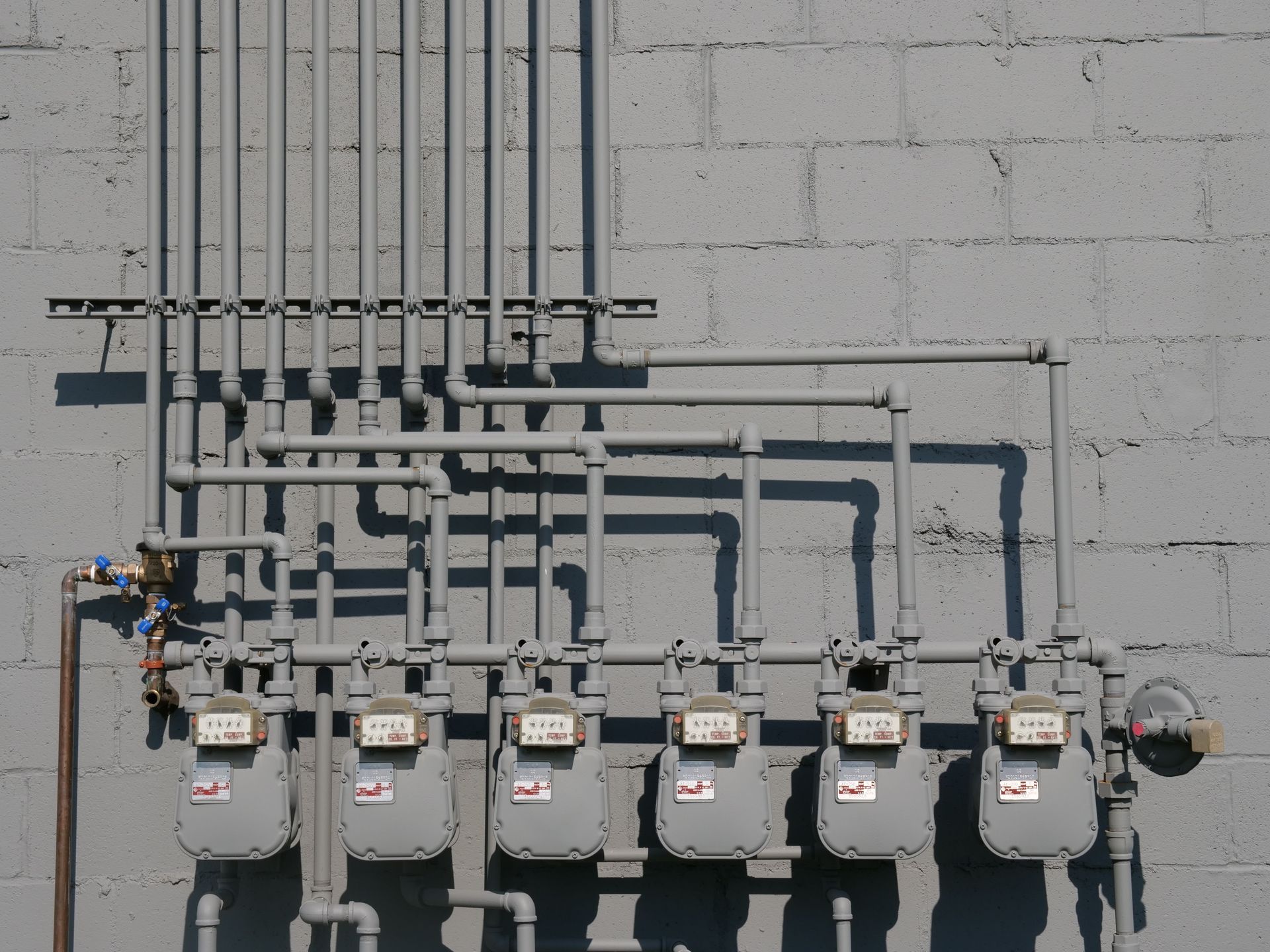
Answers About How Gas Line Work Is Done
Gas line projects for fireplace and hearth applications involve decisions that affect both how the system performs and whether it meets local inspection requirements. The following addresses the most common points of confusion.
- How is the correct pipe size determined for a gas fireplace or insert? Pipe sizing is based on the appliance's BTU input rating, the total length of the supply run from the meter or main line, and the number of fittings in the run — each elbow and coupling adds equivalent linear footage that affects available pressure, and the calculation must account for the full path, not just the straight-line distance.
- What is a pressure test and why is it required after gas line installation? A pressure test involves pressurizing the completed line and holding it at a specified level for a set period to confirm that every connection is sealed and no gas can escape — it is a required step before the line is placed into service and before the city inspection can be passed.
- When does an existing gas line need to be inspected before a new appliance is connected to it? Any time a new branch connection is being added to an existing supply line, the existing line should be evaluated for pipe condition, fitting integrity, and adequate capacity to serve both the existing and new demand — older black iron pipe systems in particular may have fittings that need replacement before a new branch load is added.
- How are gas lines routed through finished spaces without extensive wall opening? Where possible, gas lines for fireplace applications are routed through unfinished basement or crawlspace areas and brought up through a single penetration point near the appliance — this minimizes finished wall disturbance while still achieving a clean, code-compliant run.
- What happens during the inspection of a newly installed gas line in Akron? The city inspector verifies that the installation was permitted, that the pipe sizing and materials meet local code requirements, that the pressure test was performed and documented, and that the connections at both the supply and appliance ends are accessible and correctly made before approving the work.
Fireplace Mike also handles gas line services in Canton and surrounding areas. To move forward, set up a project consultation so the supply requirements, routing path, and permitting steps for your installation can be mapped out before work begins.