
Fireplace Work That Changes How the Space Functions
Fireplace upgrades and remodeling in Akron for outdated systems, inefficient inserts, or surrounds that no longer suit the space
Homes built across Akron from the postwar period through the 1980s typically include original masonry fireplaces with open-combustion designs that were standard at the time — large, open fireboxes that produce moderate heat output while sending a substantial portion of that heat up the flue along with room air. Fireplace Mike handles fireplace upgrades and remodeling in Akron for homeowners who want to improve how their fireplace functions, change what fuel type it uses, or update a surround and mantel that no longer fits the way the room is being used. Upgrading is not a single procedure — it ranges from installing a high-efficiency gas insert into an existing masonry firebox to fully rebuilding the surround, mantel, and facing material while leaving the firebox structure intact.
The starting point for any upgrade project is understanding the existing system: whether the firebox dimensions will accept the insert or liner being considered, whether the flue is lined and what its current condition is, and whether the gas supply — if the project involves converting from wood to gas — is already present or needs to be extended. Remodeling work that affects only the surround, mantel, or facing material follows a different sequence and does not require flue or gas involvement, but it does require that existing clearances from the firebox opening are maintained in the new design so that the finished installation meets code requirements.
Arrange a consultation to evaluate your current fireplace and identify which upgrade path fits your space, your existing system, and how you want the fireplace to perform..
What Fireplace Upgrades Actually Accomplish
Installing a gas insert into an existing open-masonry firebox involves lining the flue with a rigid or flexible liner sized to the insert's venting specifications, connecting the insert to a gas supply, and finishing the face of the insert to close the gap between its front frame and the existing masonry opening. The liner installation is a non-negotiable component — running an insert through an unlined or improperly sized flue is both a performance problem and a code failure. Surround and mantel remodeling work follows the structural decisions: the new facing material is installed after any insert or liner work is complete, not before.
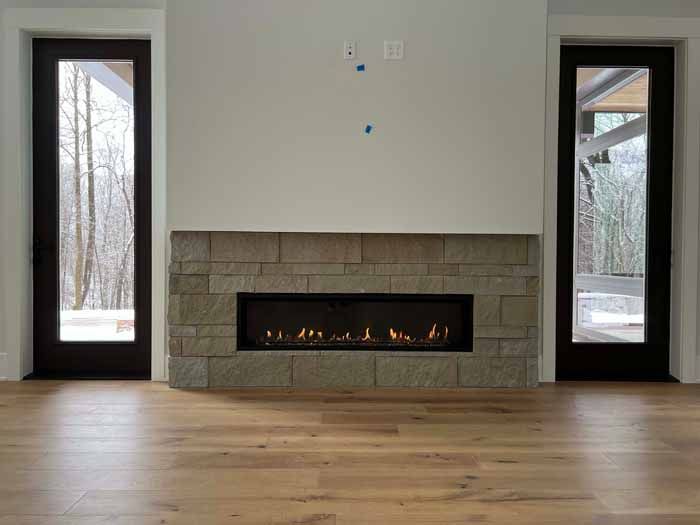
After a gas insert upgrade is complete, you will notice that the fireplace produces measurably more heat into the room with less fuel input, does not draw room air for combustion the way an open masonry fireplace does, and allows you to control heat output through a thermostat rather than by managing the fire manually. A surround and mantel remodel produces a different kind of change — the proportions, materials, and finish of the fireplace wall shift in ways that affect how the room reads, which is visible immediately once the installation is complete.
Fireplace Mike works on upgrade and remodeling projects across the range of fireplace types present in Akron's housing stock — original masonry units, factory-built zero-clearance fireplaces that were common in 1980s and 1990s construction, and freestanding stoves or fireplace systems that require different insert and liner specifications than built-in units. The approach for each differs in how the liner is routed, what facing clearances apply, and what venting configuration the insert or appliance requires..
What Property Owners Ask About Upgrade and Remodel Work
Fireplace upgrade and remodeling projects often involve a sequence of decisions — some structural, some aesthetic — that affect each other. These questions address how that process actually works and what to understand before the project begins.
- How is a gas insert sized to fit an existing masonry firebox? The insert must fit within the firebox opening dimensions with enough clearance at the sides, top, and back to allow for proper installation and code-required clearances — manufacturers publish firebox dimension ranges for each insert model, and a site measurement of the actual opening determines which models are viable before any selection is made.
- Why does a flue liner need to be replaced or added when installing a gas insert into an existing masonry chimney? A gas insert vents at much lower temperatures and with different combustion byproducts than a wood fire, and the existing masonry flue — sized and designed for wood combustion — is too large and too porous for those venting conditions; the liner brings the flue diameter down to match the insert's vent collar and creates a sealed path from the insert to the cap.
- What has to be determined before a fireplace surround or mantel can be redesigned? The firebox opening dimensions and the required clearances from combustible materials to the opening edge must be documented first, because those clearances dictate how close facing materials and mantel shelves can be positioned — the aesthetic design has to work within those fixed boundaries rather than the other way around.
- How does upgrading from a wood-burning to a gas-burning system affect the existing chimney structure? The firebox itself typically remains in place, but the flue requires relining for gas service, the damper is often replaced with a top-mounted cap-style damper or permanently locked open depending on the insert type, and a gas supply line must be routed to the firebox location from the nearest supply point in the home.
- What is the visible difference between a factory-built zero-clearance fireplace and a masonry unit when planning an upgrade? Zero-clearance fireplaces have a metal firebox with manufacturer-specific insert dimensions that differ from masonry openings — replacement inserts or liners must be matched to the specific model when possible, or the unit may need to be replaced entirely rather than upgraded, which is a different scope of work than a masonry upgrade involves.
Fireplace Mike also performs fireplace upgrades and remodeling in Canton and surrounding communities. To move forward with your project, request an on-site assessment so the existing system, firebox dimensions, and flue condition can be reviewed and a clear upgrade path can be outlined.